The Perfect 7-Day Japan Itinerary for First-Timers
Tokyo, Kyoto & Osaka — the Golden Route, done right
The route at a glance
Seven days is enough to see Japan's greatest hits without rushing — if you stick to the Golden Route: Tokyo (3 nights) → Kyoto (2 nights) → Osaka (1 night), all linked by a single bullet-train line. Below is a day-by-day plan that balances iconic sights, great food and a little downtime — then an easy way to turn it into your own personalised itinerary.
Some links on this page are affiliate links. If you book or buy through them we may earn a small commission, at no extra cost to you. We only recommend things we'd suggest to a friend.
Almost every first trip to Japan follows the same spine, and for good reason. Tokyo, Kyoto and Osaka give you the full range — neon-lit metropolis, historic temples, and Japan's best street food — and they sit in a near-straight line on the Tokaido Shinkansen, so you spend your days sightseeing rather than travelling. This is the classic version, paced for a real human with jet lag. Treat it as a template: keep what you love, and swap the rest.
Four decisions to make before you go
Sort these four things and the rest of the trip gets easy:
- When to go. Cherry blossom (late March–April) and autumn leaves (November) are stunning but busy and pricey. May, early June and winter are quieter and cheaper — and clear winter days give the best Mt Fuji views.
- Getting around town. Buy a Suica or PASMO IC card (or add one to your phone's wallet) and just tap in and out of local trains, subways and buses. No need to work out individual fares.
- The JR Pass question. Don't buy on autopilot. At 2026 prices a single Tokyo–Kyoto–Osaka loop usually costs less as individual Shinkansen tickets than the ¥50,000 nationwide pass. Run your exact route through our JR Pass calculator first (and see is the JR Pass worth it in 2026?). If it does pay off for your plans, you can buy the JR Pass on Klook.
- Staying connected. You'll want data from the moment you land for maps and train apps. For most solo travellers and couples an eSIM is the simplest option — see our full eSIM vs pocket WiFi guide if you're travelling as a group.
The 7-day itinerary, day by day
Day 1 — Land in Tokyo, ease in around Shinjuku
Don't over-plan your arrival day. Get to your hotel, grab a Suica, and let Tokyo introduce itself gently. Wander Shinjuku at dusk when the neon comes on, look out over the city (for free) from the Tokyo Metropolitan Government Building observation deck, and have your first proper ramen or izakaya dinner. If you're wired from the flight, the alleys of Omoide Yokocho are a great low-effort first meal. Tip: fight the jet lag — stay up until at least 9pm local time.
Day 2 — Old Tokyo and neon Tokyo
Start early at Senso-ji temple in Asakusa before the crowds, then browse the Nakamise market street. Head to Ueno for its park and museums, or straight to Akihabara for anime, games and arcades. In the afternoon book ahead for teamLab Planets (a walk-through digital art experience — it sells out, so reserve a slot in advance), then end the day at the famous Shibuya scramble crossing and the streets around it. Tip: Tokyo is a set of villages — pick 2–3 neighbourhoods a day and go deep rather than zig-zagging across the city.
Day 3 — Day trip: Hakone and Mt Fuji views
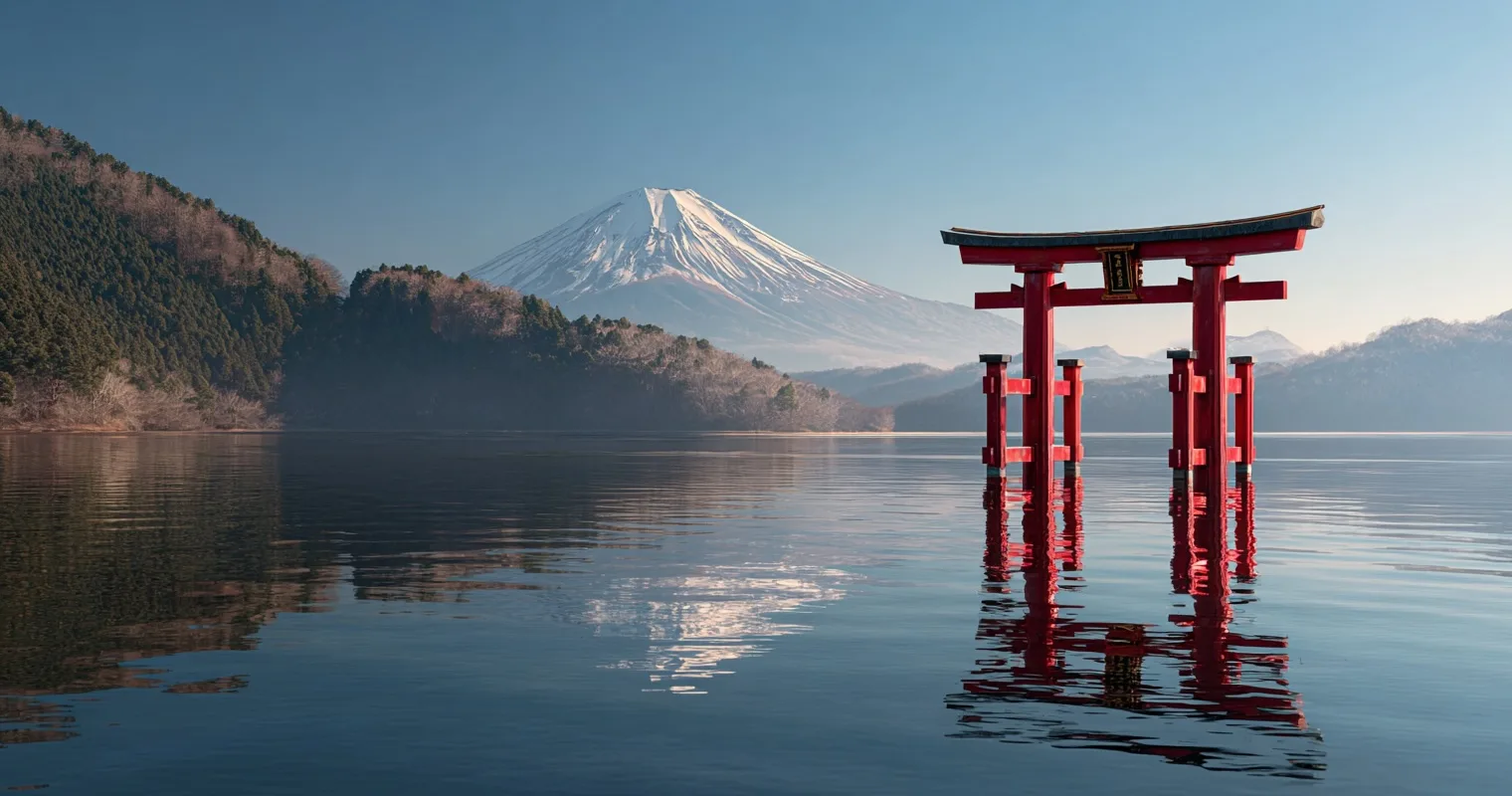
Base yourself in Tokyo and take a day trip to Hakone, about 1.5 hours away — a hot-spring town with a scenic loop of mountain railway, ropeway and a pirate-ship cruise on Lake Ashi, with Mt Fuji looming behind on clear days. Prefer temples and nature over onsen towns? Swap in Nikko (shrines and waterfalls) or Kamakura (the Great Buddha and coastal temples). Tip: this is the most weather-dependent day — keep it flexible and check the forecast the night before for the clearest Fuji views.
Day 4 — Bullet train to Kyoto; temples and Gion
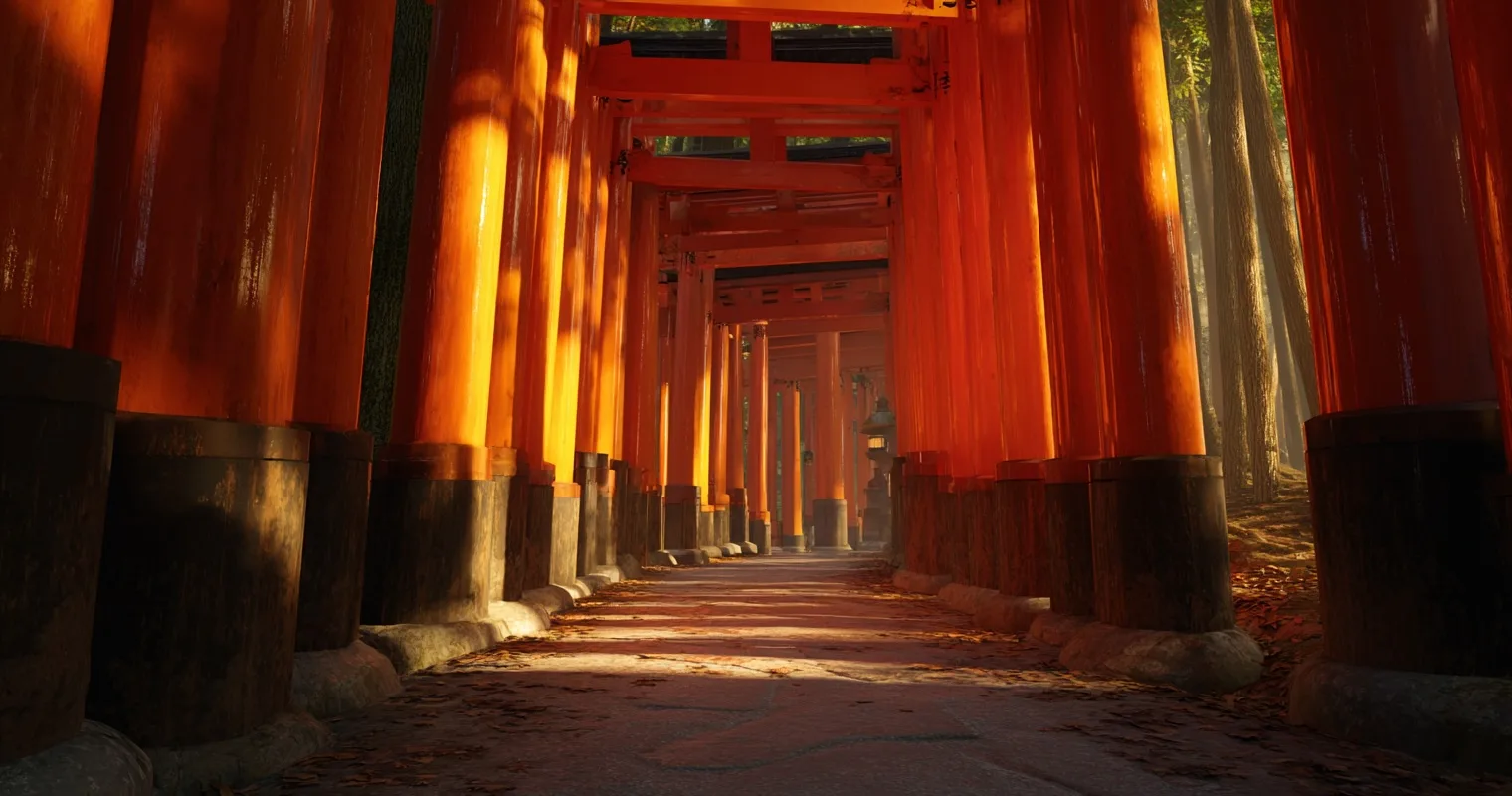
Check out and ride the Shinkansen to Kyoto (about 2h15). Drop your bags and dive into eastern Kyoto: the thousands of vermilion gates at Fushimi Inari (go early or late to beat the crowds), the wooden terrace of Kiyomizu-dera, and the lantern-lit lanes of Higashiyama and Gion, Kyoto's geisha district, in the evening. Tip: send your big suitcase ahead by luggage courier (takkyubin) so you're not hauling it between hotels.
Day 5 — West Kyoto, with an optional hop to Nara
Morning in the west: the towering Arashiyama bamboo grove (early, before the tour buses) and the golden pavilion of Kinkaku-ji. In the afternoon, either slow down with a matcha and a stroll, or take the 45-minute train to Nara to meet the famously bowing deer and see the Great Buddha at Todai-ji. Tip: Kyoto's sights open early and empty out at lunch — front-load your mornings.
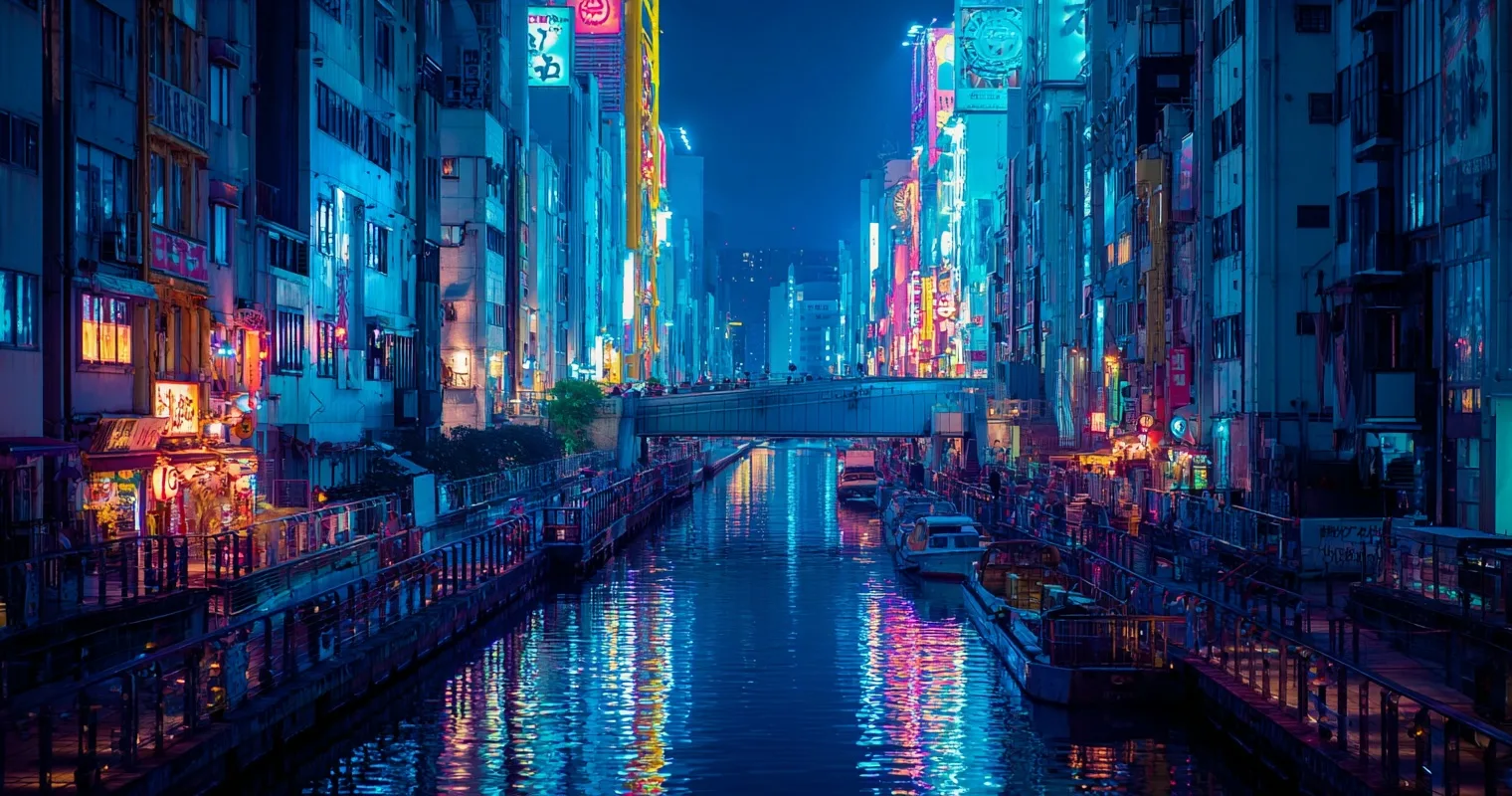
Day 6 — Osaka: castle by day, street food by night
Osaka is just 15 minutes from Kyoto by Shinkansen (or ~45 by local train). Spend the morning at Osaka Castle and its park, then give the evening to Dotonbori — Japan's most exuberant food street. This is the city to eat: takoyaki, okonomiyaki and kushikatsu, under the giant neon signs. Travelling with kids or theme-park fans? Swap the castle for Universal Studios Japan. Tip: Osaka is Japan's kitchen — come hungry and eat like a local, standing up.
Day 7 — A last morning, then fly home from Kansai
Kansai International Airport (KIX) is under an hour from central Osaka, so you have time for a relaxed last morning — a final market breakfast, some souvenir shopping in Shinsaibashi, or one more temple. Flying home from Tokyo instead? Take the Shinkansen back (about 2h45) the evening before, or first thing. Tip: leave a generous buffer for the airport transfer — Japanese trains are punctual, but KIX is a long way out.
What it costs
A rough per-person guide for 7 days, excluding international flights:
- Budget (hostels, convenience-store meals): ~US$700–1,000
- Mid-range (3-star hotels, mix of eating out): ~US$1,200–1,900
- Comfortable (nicer hotels, more experiences): US$2,200+
The biggest single costs are hotels and the Shinkansen. Accurate train numbers make a real difference — check whether a rail pass helps your exact route with the JR Pass calculator.
✨Make it your trip
This is the classic route — but your perfect version depends on your pace, your budget and what you actually care about, whether that's food, temples, anime, hiking or hot springs. Our free AI planner takes this Golden Route as a starting point and builds you a personalised day-by-day itinerary in about a minute, with real routes, times and costs.
🙋First-timer FAQs
Is 7 days enough for a first trip to Japan?
Yes — seven days is enough to see Japan's headline sights without feeling rushed, as long as you stay on the Golden Route (Tokyo, Kyoto and Osaka) rather than trying to add far-flung regions like Hokkaido or Hiroshima. The three cities sit on one Shinkansen line, so travel between them is fast and simple, leaving your days for sightseeing rather than transit.
Should I fly into Tokyo or Osaka?
Either works, and you don't have to fly in and out of the same city. The most efficient version of this route flies into Tokyo (Narita or Haneda) and out of Osaka (Kansai), so you never backtrack. If your flights only work round-trip from Tokyo, just do the itinerary and take the Shinkansen back — it's about 2 hours 45 minutes from Osaka to Tokyo.
Is the JR Pass worth it for this itinerary?
Often not, at 2026 prices. Since the nationwide 7-day pass rose to ¥50,000, a single Tokyo–Kyoto–Osaka loop usually costs less bought as individual Shinkansen tickets, and a regional pass can be cheaper still. It depends on your exact route and any day trips, so check your numbers in our JR Pass calculator before you buy.
Do I need to speak Japanese?
No. Major stations, signs and ticket machines have English, Google Maps and Google Translate cover the rest, and IC cards (Suica/PASMO) mean you rarely need to talk to a ticket window. A few polite phrases go a long way, but you can complete this whole trip comfortably in English.
When is the best time to visit?
Late March to April (cherry blossom) and late October to November (autumn leaves) are the most beautiful — and the busiest. May and early June are mild and quieter; midsummer (July–August) is hot and humid; winter is cold but crisp, cheaper, and often clear for Mt Fuji views. Any season works for this route.
How much should I budget for 7 days?
Excluding international flights, a comfortable mid-range trip runs roughly US$1,200–1,900 per person for 7 days (mid-range hotels, Shinkansen, food and attractions). Budget travellers can do it for less with hostels and convenience-store meals; a bump to nicer hotels and more paid experiences pushes it higher. Enter your own budget in the planner for a version that fits.